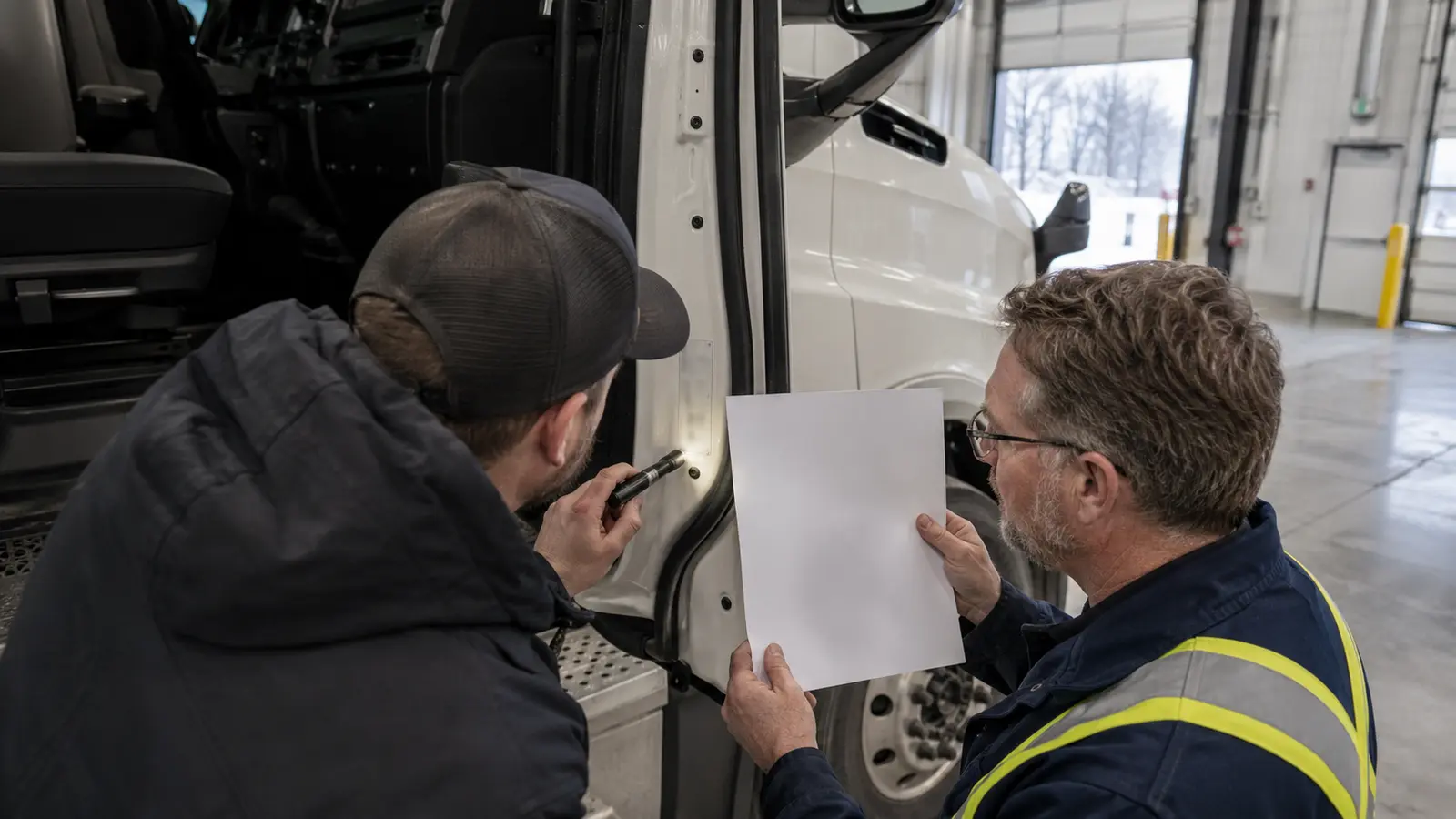
VIN
Use the VIN as the primary vehicle identity reference for records, registration, recalls and document matching. This guide does not decode VIN characters or claim access to an OEM database.
Chassis and serial information
Manufacturers may use chassis, serial or build references in addition to the road VIN. Record the identifiers exactly and ask the manufacturer or authorized service channel which record each one addresses.
Certification and data labels
Photograph the vehicle certification/information labels. Depending on the vehicle and label, they may help confirm manufacturing information, GVWR, GAWR and tire/rim information. Check that labels are legible and consistent with the documents and physical truck.
Engine and transmission identification
The engine serial/model and exact transmission designation may be recorded separately from the vehicle VIN. Read component tags and compare them with service records and the build sheet.
Factory build or specification sheet
Factory build information can help identify the originally ordered engine, transmission, axles, suspension, wheelbase, cab and optional equipment. Ask for an authoritative copy tied to the truck's VIN or chassis record.
Original build vs current configuration
A used truck may have been repowered, regeared, repaired, converted, fitted with a different fifth wheel or modified for vocational work. Inspect the current truck and reconcile changes with invoices and qualified inspection findings.
- Match VIN and labels to ownership documents
- Match component serials to service evidence
- Document modifications instead of assuming factory condition
- Never infer an entire build from the model badge
Confirm the process that applies
Requirements and records vary by truck, manufacturer, province, transaction and intended use. Use authoritative registries, agencies, service providers and qualified advisers for the actual purchase.