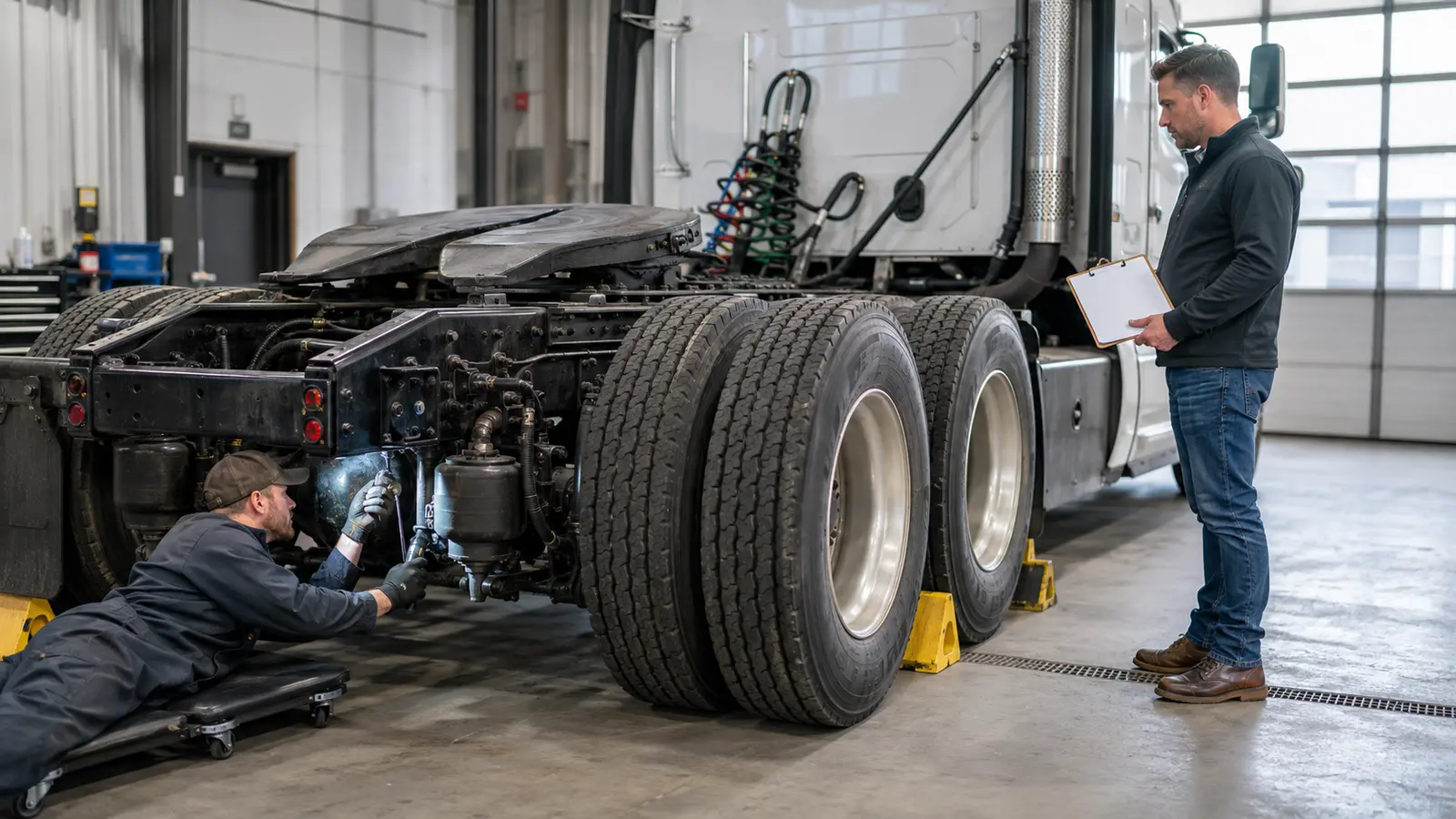
Your acquisition and inspection worksheet
Review date: September 9, 2026. Tick a task only after recording its evidence. Checks stay in this open page until it is reloaded. Use your browser’s print command to keep a copy. This educational worksheet does not certify roadworthiness or replace a qualified inspection.
0 of 24 tasks recorded
Manufacturer context: Cummins electronic diagnostics and aftertreatment components. These explain system scope; the worksheet is editorial buying guidance, not a manufacturer inspection certificate.
Prepare the purchase decision
Documents and maintenance records
Confirm ownership information and compare the VIN, model year, odometer and component details with the truck presented. Review maintenance and repair invoices, inspection reports, engine and transmission work, emissions repairs and evidence of major component replacement. Note gaps, inconsistent dates or unexplained mileage changes.
- Ownership and lien checks
- Build sheet and component serials
- Maintenance and repair invoices
- Mileage and engine-hour consistency
Cold start, fluids and engine bay
Ask that the engine be cold if the inspection plan allows. Observe starting behaviour, smoke, noise, blow-by indications and warning lights. Check engine oil and coolant condition, visible leaks, belts, hoses, mounts, wiring and signs of recent cleaning that could conceal seepage. A qualified technician can interpret findings that a visual review cannot.
DOC, DPF, SCR and DEF systems
Review current and historical faults, regeneration frequency, parked-regeneration history where available, DEF quality issues and completed aftertreatment repairs. Frequent regeneration can justify further diagnosis because the cause may involve duty cycle, sensors, dosing, temperature control or upstream engine condition. Do not treat warning-light clearing or emissions tampering as repair.
Transmission, clutch and driveline
Road test shifts under suitable conditions and listen for abnormal noise. On a manual, check clutch engagement, free play and available clutch measurement. On an automated transmission, review shift quality, clutch data and calibration history where available. Inspect driveshafts, universal joints, carrier bearings, differentials and visible seals for play, damage or leakage.
Suspension, air system and brakes
Inspect springs or air bags, shocks, bushings, torque rods, levelling valves and suspension mounts. Build air pressure and watch for warning behaviour or excessive leakage. Review brake linings, drums or rotors, chambers, hoses and adjustment indicators with a qualified inspector. Uneven wear can point to alignment, component or maintenance issues.
Tires, wheels, frame and fifth wheel
Record tread depth and tire age, then look for mismatched sizes, cuts, sidewall damage and irregular wear. Inspect wheels, studs and hubs. Follow the frame rails and crossmembers for cracks, corrosion, drilling, fresh paint, bends or repair evidence. Check fifth-wheel jaws, plate, mounts, slider and air release where fitted.
Steering, electrical, cab and sleeper
Check steering play and linkage, exterior lights, batteries, charging system, dash warnings, gauges, mirrors, wipers and HVAC. Inspect cab mounts, seats, restraints, doors, windows, water leaks and interior wear. In a sleeper, test bunk heat, APU, refrigerator or inverter equipment where present and verify that modifications are safely installed.
Road test and post-test check
With permission and appropriate licensing, test starting, steering, braking, acceleration, shifting, cruise and engine-brake operation in conditions that reveal normal behaviour. Listen for vibration and driveline noise. After the road test, recheck for fresh leaks, unusual heat, odour, warning lights and air loss. Record findings before negotiating.
Keep inspection boundaries clear
A pre-purchase mechanical inspection, a provincial safety inspection, a lien search and a factory-build verification answer different questions. Do not treat one as proof that the others are complete.
Use qualified help where appropriate
General research cannot confirm the condition, legality or suitability of a specific truck. Consider qualified mechanical, legal, financial and insurance advice for the purchase.