Gather verifiable details
Record year, make, model, VIN-safe identification details, kilometres, engine, transmission, axle configuration, wheelbase, sleeper, maintenance information, location and asking price. Confirm values from the truck, build sheet and records instead of copying another advertisement.
Organize records
Sort maintenance and repair invoices by date. Highlight recent tires, brakes, engine, transmission or emissions work without implying that repair eliminates all future risk. Be ready to explain duty cycle, engine hours, idle time, ownership history and known issues.
Build a useful photo set
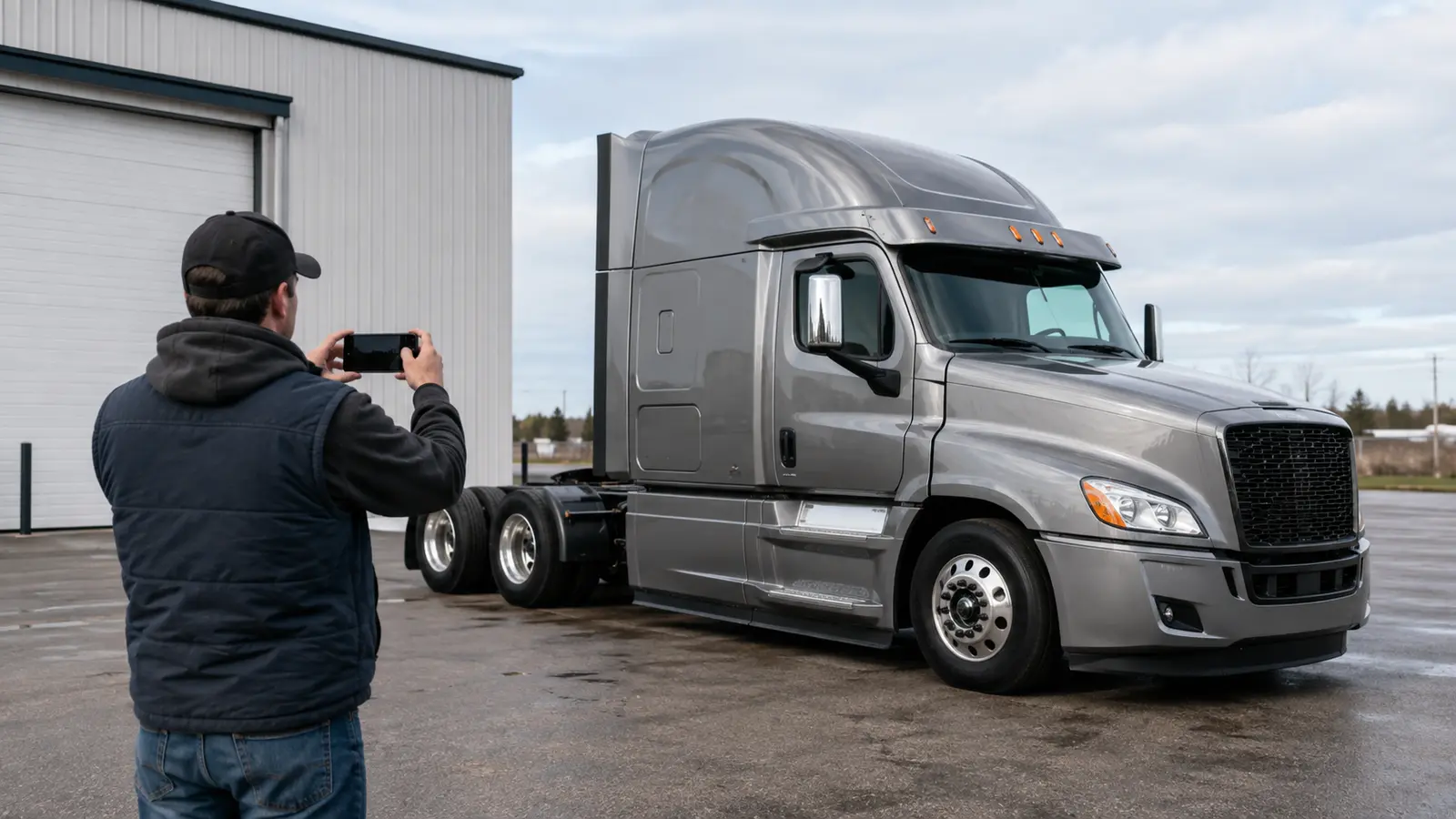
Use even daylight and a clean background. Photograph front and rear three-quarter views, both sides, engine bay, tires, frame, fifth wheel, cab, dash, odometer, sleeper and known damage. Avoid filters that hide condition, and remove personal documents or sensitive identifiers from the frame.
Write for serious buyers
Lead with the actual configuration and intended use. Use specific, verifiable information, disclose known issues and explain recent work plainly. Avoid unsupported claims such as perfect condition, guaranteed reliability or invented market demand.
Prepare for inquiries and transfer
Decide which inspection access, test drive and payment methods you will accept. Verify the buyer before releasing the truck or original documents. Use written terms and qualified advice for ownership transfer, lien discharge, tax and jurisdiction-specific requirements.
Use qualified help where appropriate
General research cannot confirm the condition, legality or suitability of a specific truck. Consider qualified mechanical, legal, financial and insurance advice for the purchase.