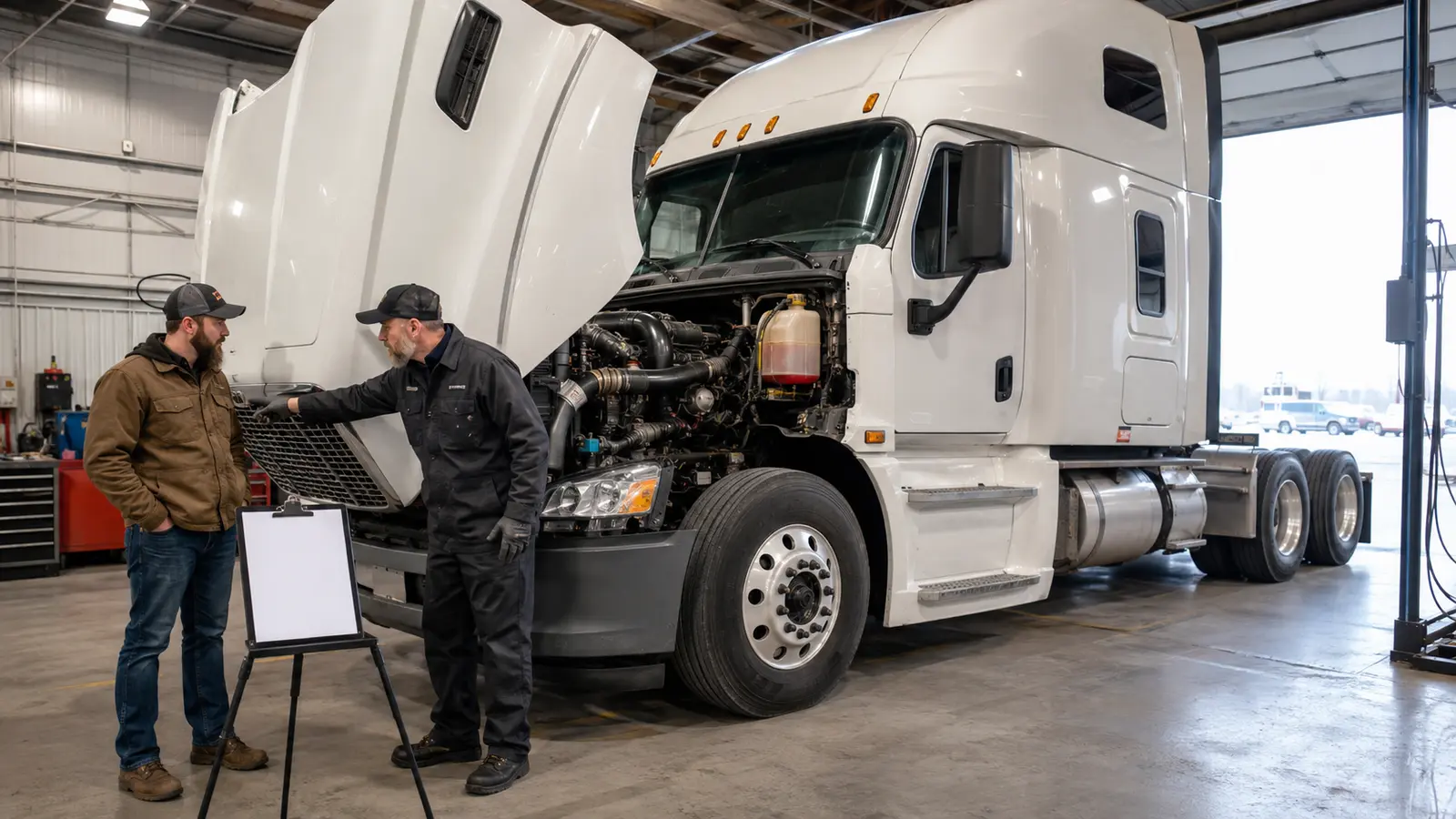
Horsepower, torque and displacement
Horsepower describes the rate at which work can be done, while torque describes twisting force. Engine displacement is the volume swept by the cylinders and is not a direct promise of output, durability or fuel economy. Ratings, calibration, gearing and duty cycle determine how an engine performs in a particular truck.
Transmission and automated manual transmission
A manual transmission gives the driver direct clutch and gear control. An automated manual transmission, or AMT, uses actuators and software to operate a geared transmission and clutch. It is not the same as a passenger-car automatic. Buyers should consider shift behaviour, clutch condition, calibration, service history and application fit.
Rear axle ratio
Rear ratio describes the relationship between driveshaft and axle rotation. Numerically higher gearing can improve startability and low-speed pulling but may increase engine RPM at a given road speed. Numerically lower gearing can reduce cruise RPM but may not suit every load or route. Tire size, transmission ratios, engine torque curve and intended duty must be considered together.
Wheelbase and axle configuration
Wheelbase affects turning radius, ride, weight distribution and available frame space. Axle descriptions such as 6×4 indicate driven and non-driven wheel positions, but do not state legal payload or component ratings. Lift axles and specialized arrangements require careful review of the complete build and applicable rules.
Axle ratings and GVWR
Front and rear axle ratings describe component limits for those assemblies. Gross vehicle weight rating, or GVWR, is the manufacturer's rating for the loaded vehicle. Neither number replaces jurisdictional weight limits, tire ratings, bridge formulas, permits or the gross combination limits relevant to a tractor-trailer operation.
Suspension and fifth wheel
Air, spring and vocational suspension choices influence ride, articulation, maintenance and application fit. The fifth wheel connects the tractor and trailer; its height, position, slide mechanism, rating and condition affect coupling and weight distribution. Inspect mounts, jaws, plate wear and release operation.
Sleeper, fuel and DEF capacity
Sleeper size affects driver space, storage, wheelbase and weight. Fuel capacity affects range and tare weight, while DEF capacity supports the emissions system and should be evaluated with the operating cycle. Confirm actual tank sizes and usable capacity on the individual truck rather than relying on a model-level assumption.
Engine brake, tires and wheels
An engine brake can help manage speed and reduce service-brake demand where its use is appropriate. Tire size, load range, tread, age and matching affect capacity and wear. Steel and aluminum wheels differ in weight, cost and service considerations. Verify ratings and condition across the complete wheel-end assembly.
Explore specifications in depth
Continue with focused guides for rear axle ratio, engine hours versus kilometres, axle ratings, wheelbase and fifth-wheel configuration. Each connects the listing field to practical buying and inspection questions.
Use qualified help where appropriate
General research cannot confirm the condition, legality or suitability of a specific truck. Consider qualified mechanical, legal, financial and insurance advice for the purchase.