Prepare the purchase decision
Define the job before the model
Write down the intended trailer, typical gross combination weight, route, annual kilometres, terrain, time away, terminal access and service network. Highway, regional, local, heavy-haul and vocational work place different demands on wheelbase, gearing, axles, cooling and cab configuration. A popular model with the wrong specification can be a poor purchase, while a less fashionable truck with complete records and the right build may be the stronger operating choice.
Read kilometres in context
Odometer kilometres should be compared with engine hours, idle time and prior duty. Long, steady highway runs create a different wear pattern from short trips, yard work or extended idling. Ask for maintenance intervals, oil analysis where available, major-component history and documentation that supports the displayed mileage. A low number without records is not automatically safer than a higher-mileage truck with disciplined maintenance.
Confirm the exact specification
Record the engine family and rating, transmission, rear-axle ratio, axle ratings, wheelbase, suspension, fifth wheel, fuel and DEF capacity, sleeper and safety equipment. Specifications vary by model year and configuration. Use the build sheet, component tags and reliable service records where possible. Confirm that the truck can legally and practically perform the intended work in every jurisdiction where it will operate.
Engine, emissions and transmission
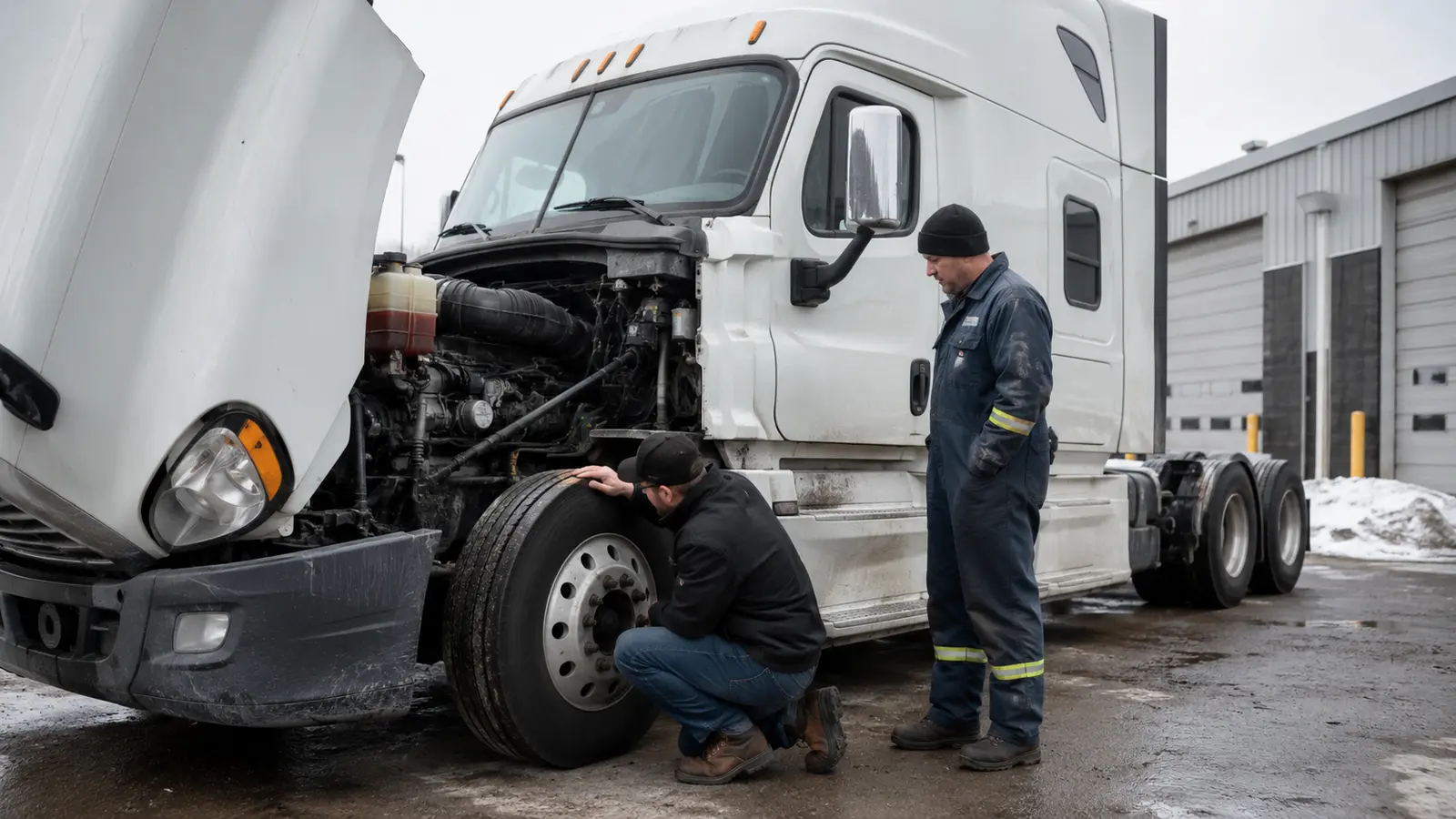
Arrange a cold start when practical and observe warning lights, smoke, noise, leaks and fluid condition. Review active and stored faults, regeneration history, aftertreatment repairs and evidence of unresolved upstream engine problems. Road test the transmission through appropriate operating conditions. For manuals, consider clutch operation and measurements; for automated manuals, review shift quality, clutch data, calibration and software history where available.
Inspect the chassis, cab and sleeper
Check frame rails, crossmembers, suspension, axles, brakes, tires, wheels, fifth wheel, steering and driveline. Look for corrosion, cracks, fresh paint over repairs and uneven tire wear. Inside, test dash functions, HVAC, seats, restraints, windows, lighting, bunk heat, APU and sleeper accessories. Compare wear with the claimed mileage and duty cycle.
Calculate the real acquisition cost
Budget beyond the asking price. Include applicable tax, financing cost, inspection, travel, registration, insurance, immediate maintenance, tires, emissions repairs and lost revenue while the truck is prepared for service. Keep a working-capital reserve. A cheaper truck that needs prompt tires, brakes and aftertreatment work may cost more to place into reliable service than a higher-priced, better-documented unit.
Protect the transaction
Verify seller identity, ownership, lien status and the written terms of sale. Keep specifications, representations, inspection results and payment conditions in writing. For material purchases, use qualified mechanical, legal, insurance and financial help appropriate to the province and transaction. SemiTrucks.ca research is educational and cannot establish the condition, title or suitability of a specific truck.
Connect the listing to evidence
For each advertised field, identify the confirming source: VIN and ownership for identity, build sheet and component tags for specification, ECM and service records for usage history, and a qualified inspection for present condition.
Use qualified help where appropriate
General research cannot confirm the condition, legality or suitability of a specific truck. Consider qualified mechanical, legal, financial and insurance advice for the purchase.