Scope
Class 8 tractors used for local, regional and highway work; exact cab offerings vary by manufacturer, model and year.
Where a day cab fits
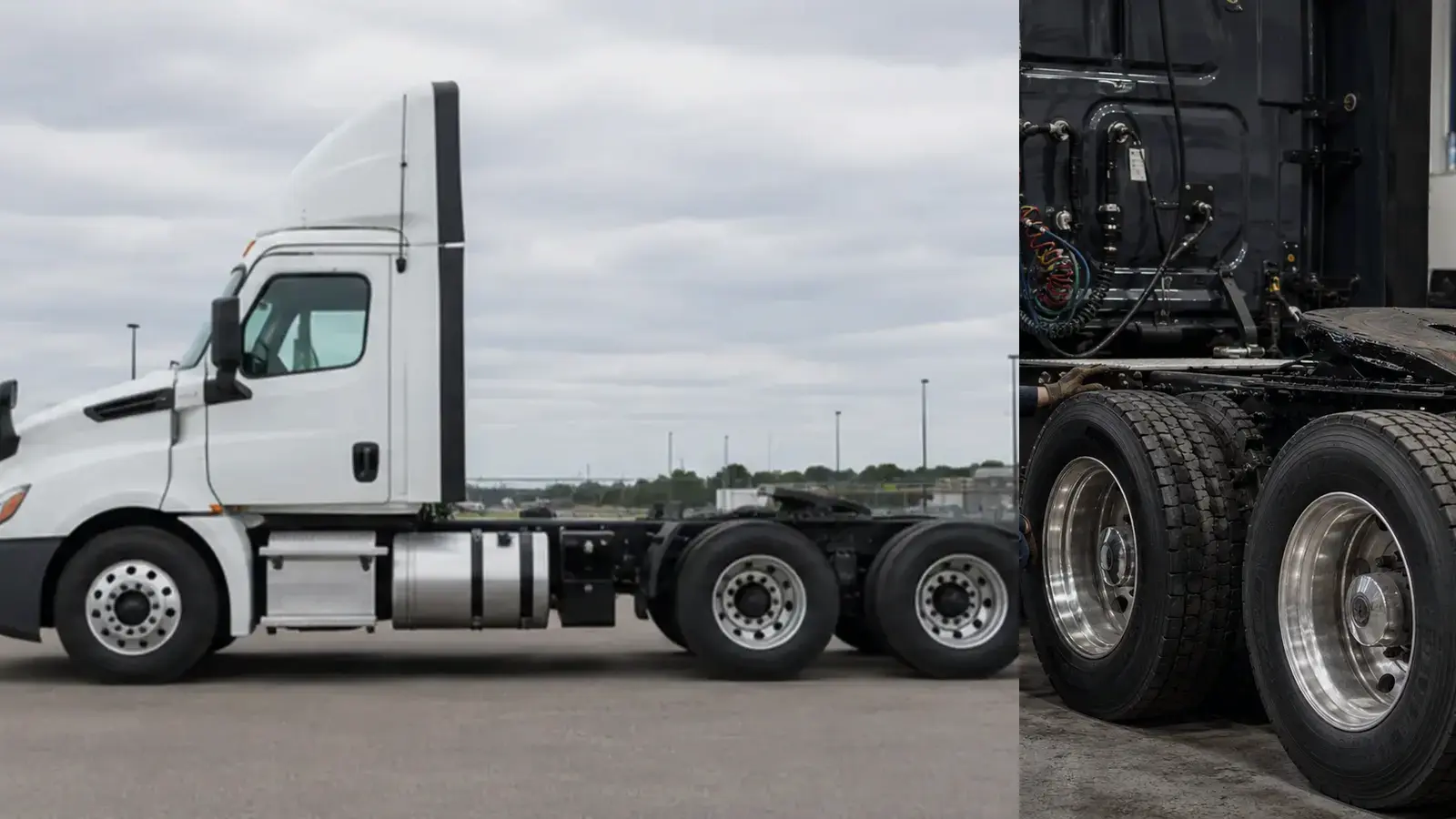
A day cab can suit home-daily and shorter regional work where overnight accommodation is not required. Its shorter overall package may help in yards and dense delivery areas, but actual turning and axle loading still depend on wheelbase, axle position, tanks and fifth-wheel placement.
Where a sleeper fits
A sleeper supports routes that keep a driver away from home. Bunk, storage, climate-control and electrical equipment vary widely, and the added cab length can affect tare weight, wheelbase, trailer clearance and manoeuvrability.
Driver comfort is operational
Seat travel, bunk access, HVAC, auxiliary heat, power, storage and noise can affect retention and fatigue. Confirm that represented equipment works; a sleeper badge does not confirm an APU, refrigerator, inverter or functioning bunk climate system.
Compare the complete build
Review route length, terminal access, trailer type, fuel capacity, annual kilometres, axle loading and time away together. A well-matched regional sleeper may be more useful than a day cab for occasional overnight work, while unused sleeper space can add cost and weight.
Treat the advertised specification as a lead
A listing can help identify the questions to ask, but component tags, certification labels, service evidence and the physical truck establish the working specification. Verify the VIN and factory build sheet for the individual truck.
- Match VIN and ownership records before comparing configuration
- Record engine, transmission and axle identifiers exactly
- Confirm wheelbase, fifth-wheel travel and trailer clearance
- Use a qualified independent inspection for condition and suitability
Verification boundary
General research cannot establish the identity, condition, legal operating weight or suitability of an individual truck. Verify the VIN and factory build sheet for the individual truck and use qualified help where appropriate.
Sources & evidence
Primary technical and government sources retained with scope and claim notes.
All-New VNL Body Builder ManualVolvo Trucks North America · Applicable to 2025 year-model all-new VNL · Accessed September 2, 2026Supports: Build-specific body, electrical, PTO and configuration verification context.PACCAR Powertrain product resourcesPACCAR Powertrain · Applicable to Current published PACCAR powertrain documents · Accessed September 2, 2026Supports: Transmission variants, intended applications and the need to identify the installed model.