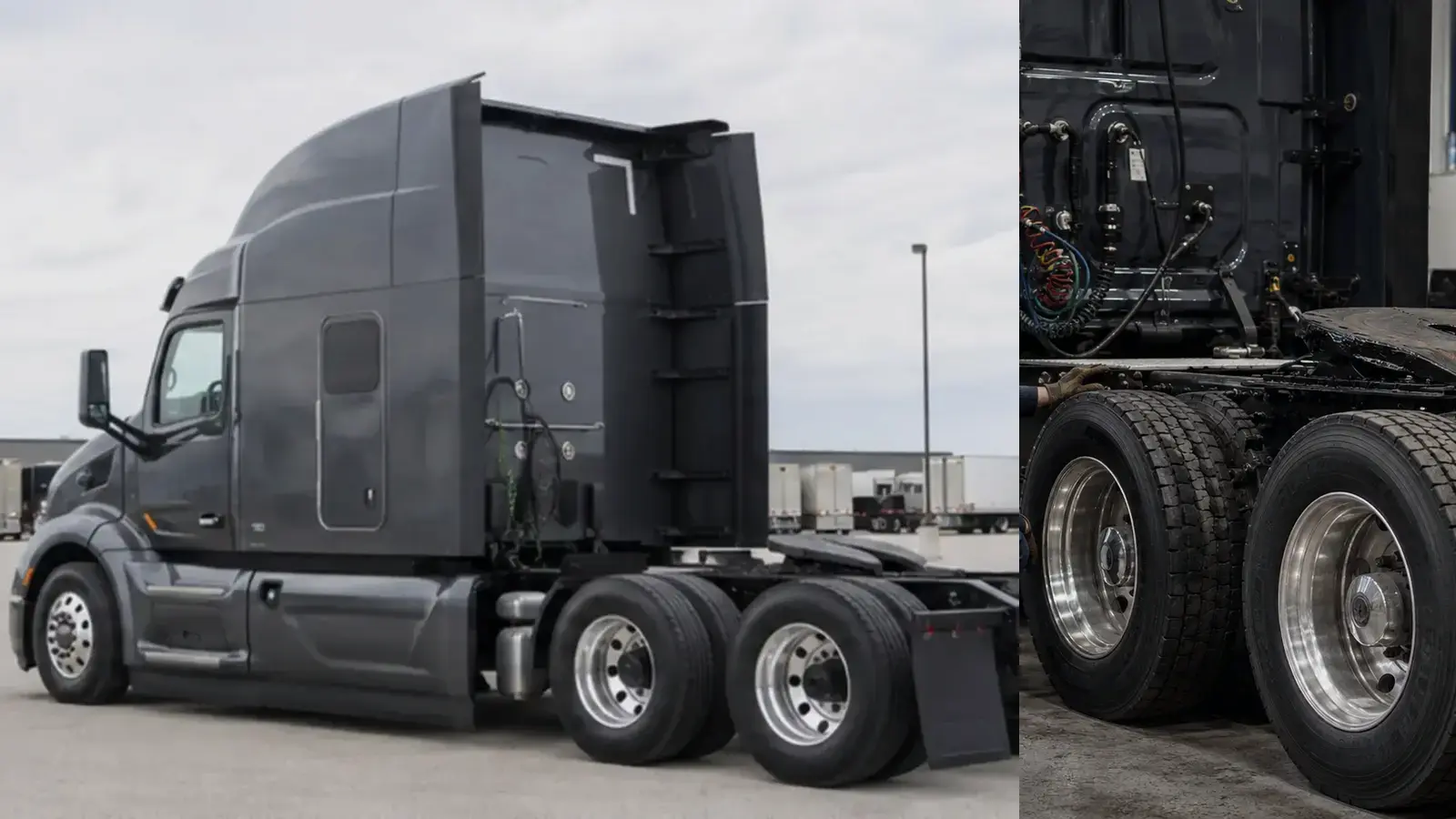
Scope
North American highway sleepers across multiple manufacturers and model generations.
Mid-roof and high-roof
Roof height changes standing room, overhead storage, exterior aerodynamics and sometimes the intended trailer context. Names and dimensions are manufacturer-specific; do not compare two roof labels as though they use one industry measurement.
Sleeper length
Nominal sleeper lengths help describe cab families but do not confirm bunk layout, cabinet volume, seat travel or usable living space. Fairings, extenders and exterior measurements can also confuse a casual measurement.
Weight and wheelbase
A larger sleeper generally requires more cab length and can influence wheelbase and tare weight, but the result depends on tanks, batteries, APU, fifth wheel and axle placement. Confirm the actual scaled and rated configuration.
Inspect the living system
Test bunk heat and air conditioning, inverter and shore-power equipment where installed, lighting, outlets, cabinets, doors, windows, seals, mattress platform and signs of water entry or unapproved wiring.
Treat the advertised specification as a lead
A listing can help identify the questions to ask, but component tags, certification labels, service evidence and the physical truck establish the working specification. Verify the VIN and factory build sheet for the individual truck.
- Match VIN and ownership records before comparing configuration
- Record engine, transmission and axle identifiers exactly
- Confirm wheelbase, fifth-wheel travel and trailer clearance
- Use a qualified independent inspection for condition and suitability
Verification boundary
General research cannot establish the identity, condition, legal operating weight or suitability of an individual truck. Verify the VIN and factory build sheet for the individual truck and use qualified help where appropriate.
Sources & evidence
Primary technical and government sources retained with scope and claim notes.
All-New VNL Body Builder ManualVolvo Trucks North America · Applicable to 2025 year-model all-new VNL · Accessed September 2, 2026Supports: Build-specific body, electrical, PTO and configuration verification context.PACCAR Powertrain product resourcesPACCAR Powertrain · Applicable to Current published PACCAR powertrain documents · Accessed September 2, 2026Supports: Transmission variants, intended applications and the need to identify the installed model.