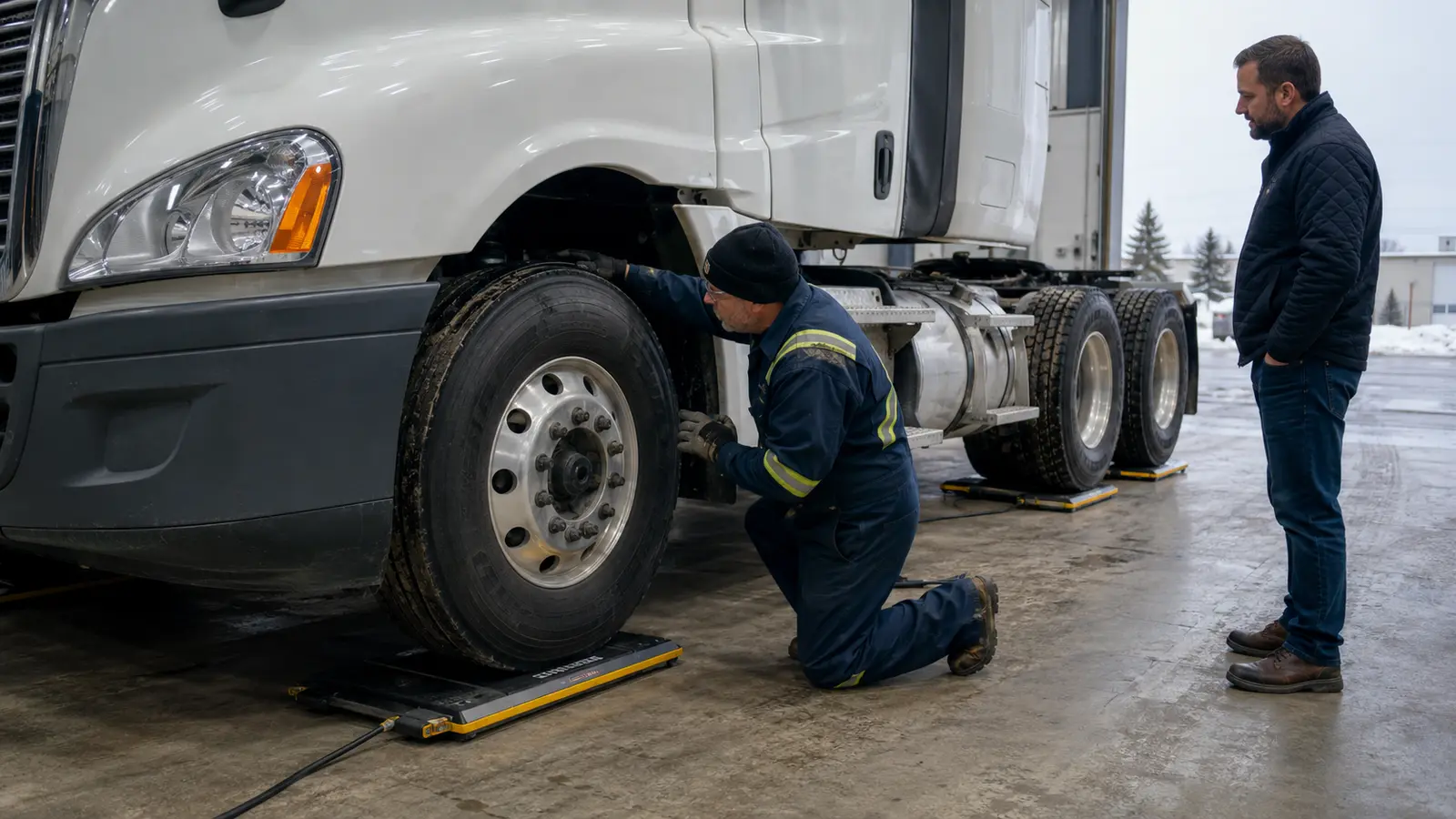
Steer, drive and tandem ratings
A truck may have a rated steer axle, one or more drive axles and a tandem or other group. Confirm the manufacturer's labels and component records; similar-looking axles can carry different ratings.
The rating system
Axle, suspension, wheel and tire ratings interact. The safe component limit is not created by choosing the largest number from one part. Modifications, replacement components and condition also require review.
Rating is not legal permission
Vehicle component ratings and legal allowable operating weights are related but are not the same thing. Provincial rules, axle spacing, configuration, permits, routes and operating authority can affect what is legally allowed.
Buyer verification
Ask for the build sheet and rating labels, inspect suspension and mounting condition, confirm tire and wheel ratings, and obtain jurisdiction-specific advice for the intended work. This guide does not provide a universal Canadian legal-weight limit.
Configuration does not equal legal weight
Tandem, tri-drive and auxiliary-axle descriptions identify hardware, not the legal weight for every province, route or permit. Confirm component labels and current jurisdiction-specific operating requirements separately.
Verify the individual truck
Build information, component tags, service records, diagnostics and a qualified inspection take priority over general family-level guidance.
Sources & Technical References
Primary manufacturer and government resources for continuing configuration-specific research.
Transport Canada Motor Vehicle Safety RegulationsTransport Canada commercial-vehicle safety context