MODEL COMPARISON · REVIEWED SEPTEMBER 9, 2026
Freightliner Cascadia vs Volvo VNL
This comparison separates Freightliner’s fourth-generation Cascadia technical reference from the all-new Volvo VNL product reference reviewed September 9, 2026. Both badges also cover older trucks. Use the generation and build records before applying these descriptions to a used listing; this is not a same-year fuel-economy or reliability test.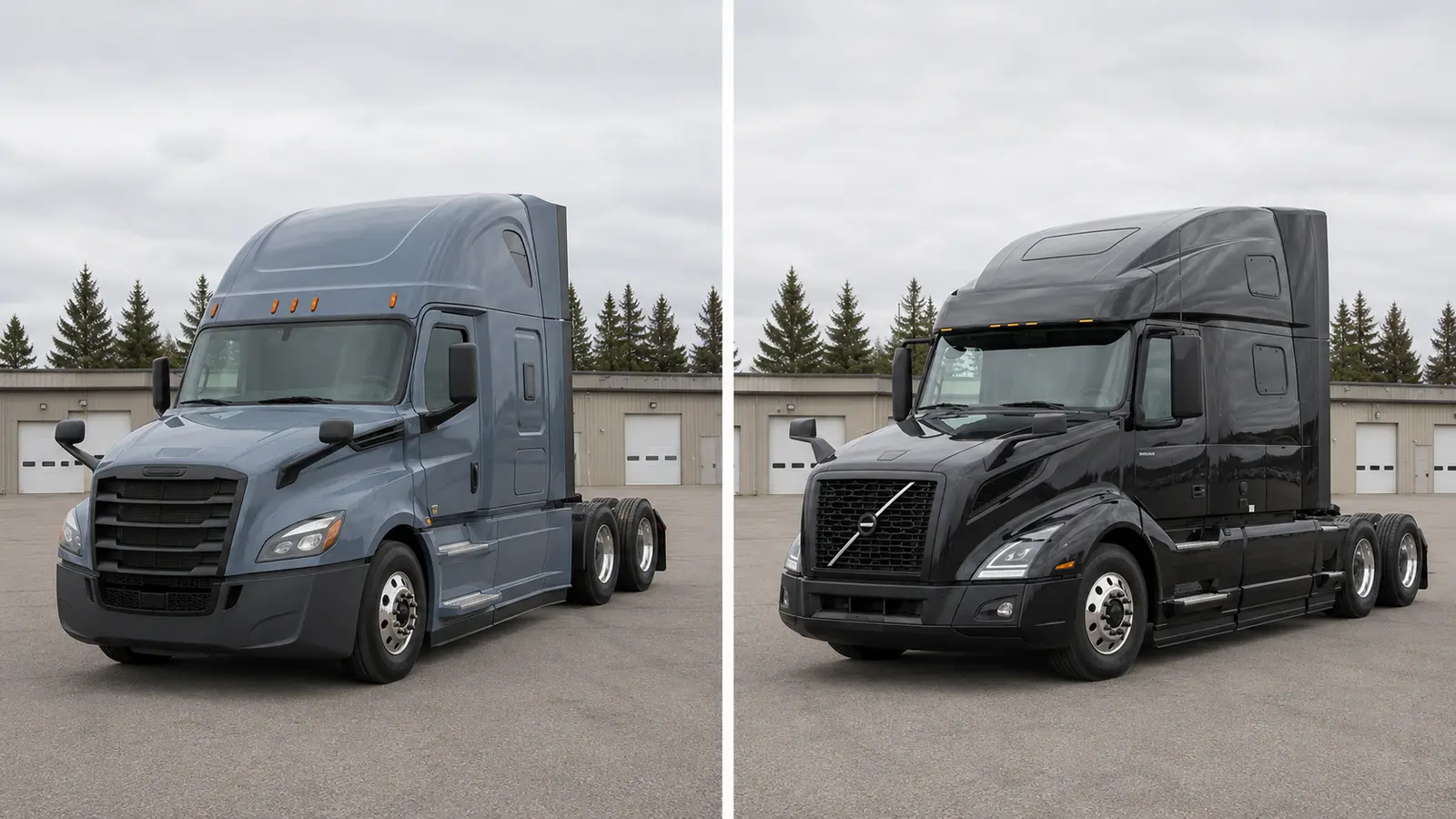
Regional Canadian work: match the actual cab and yard
For distribution with occasional overnight trips, compare a day cab against the smallest sleeper that fits the schedule. VNL 300 and 440 are different accommodation choices; the Cascadia’s day-cab and sleeper choices also require separate dimensions. Test visibility, low-speed handling and coupling clearance in a suitable environment. A family specification page cannot tell you which candidate fits your yard or trailer.
Highway fleet: make the fuel comparison fair
For an Ontario–Alberta fleet, compare fuel consumed against all kilometres, including repositioning, and keep idle time separate where data allows. Match trailer aerodynamics, loads, average speed and winter operation before drawing a conclusion. Investigate whether either truck’s maintenance faults, tyre pressures or alignment affected the sample. Published improvements against each manufacturer’s own previous model have different baselines and should not be subtracted to invent a head-to-head advantage.
Owner-operator: investigate the repair pathway
Ask the workshops on your routes which installed engine and gearbox variants they can diagnose, what access they need and how appointments and parts are handled. Obtain the truck’s reports before scheduling an inspection so the technician can investigate repeat faults instead of merely clearing them. Compare purchase cash, immediate repairs, expected downtime and a realistic repair reserve. Let documented condition and route fit decide between the two candidates.
Which should you buy?
The better purchase is usually the truck with the configuration, condition, maintenance history and price that best fit the intended work. Arrange an appropriate inspection and compare actual records before choosing.
Research both models
Sources & model references
Primary manufacturer material supports model context. Verify the applicable generation and individual build.
Freightliner fourth-generation Cascadia specificationsVolvo Trucks — all-new VNL product range (current; accessed September 1, 2026)Freightliner Cascadia product informationVolvo Trucks — all-new VNL announcement (January 2024)Volvo Trucks — 2025 year-model body-builder documentation