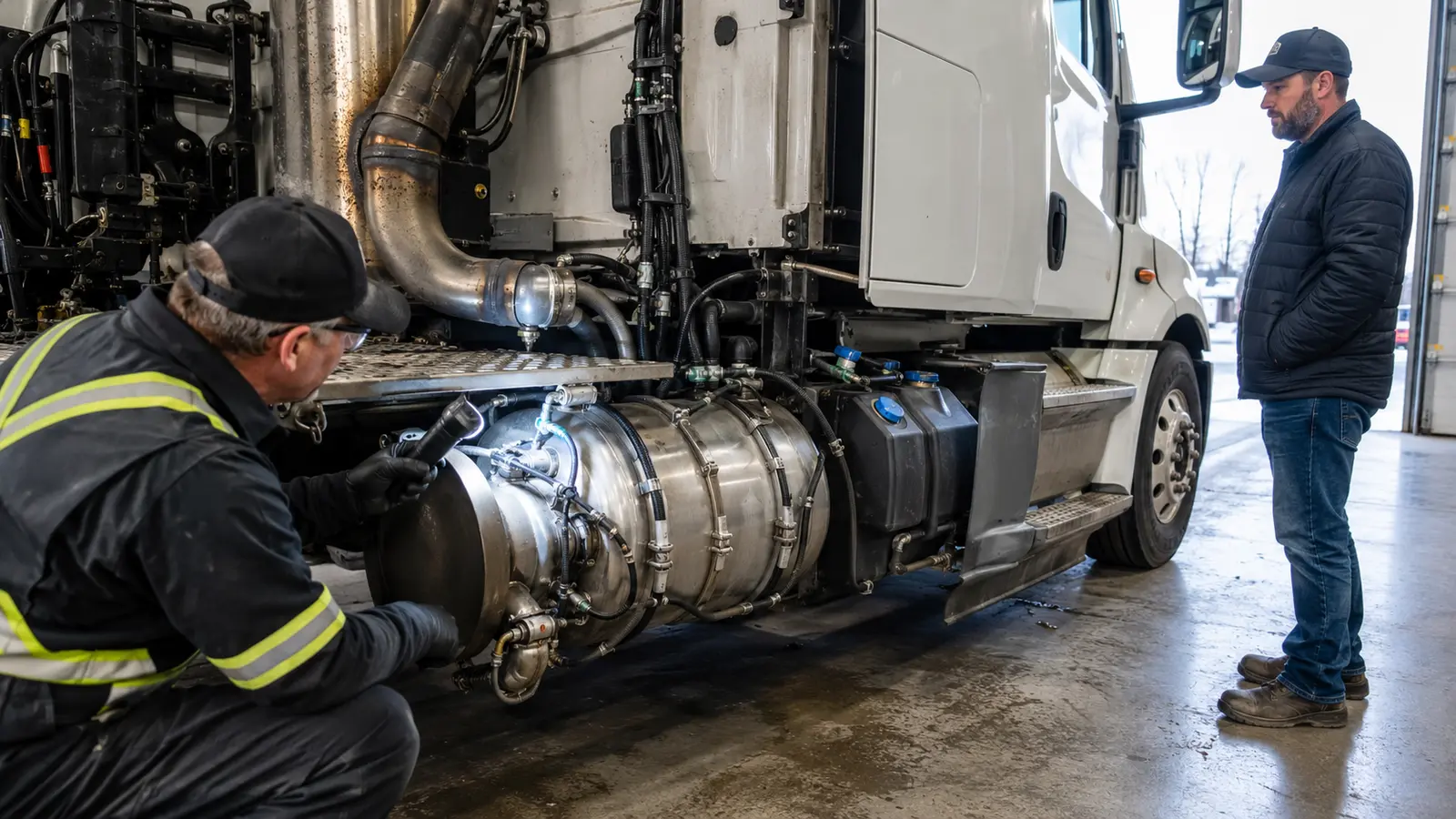
DOC: diesel oxidation catalyst
The DOC is an exhaust aftertreatment component that helps oxidize certain exhaust constituents and supports conditions needed elsewhere in the system. It is one part of a coordinated system; a fault attributed near the DOC can still require diagnosis of sensors, engine operation or upstream conditions.
DPF: diesel particulate filter
The DPF captures particulate matter, including soot. Soot load is managed through regeneration, while non-combustible ash must eventually be removed through proper service. Ask for cleaning or replacement records and for evidence of the cause when a filter has repeatedly become restricted.
SCR and DEF
Selective catalytic reduction uses diesel exhaust fluid, or DEF, to reduce nitrogen oxides in the exhaust. DEF quality, dosing components, sensors, temperature and catalyst condition can all affect operation. Warning messages should be diagnosed rather than cleared without understanding the cause.
Passive, active and parked regeneration
Passive regeneration occurs when operating conditions provide enough exhaust heat to oxidize soot. Active regeneration uses engine controls to raise exhaust temperature during operation. A parked regeneration is a stationary process requested by the system or operator under specified safe conditions. Terminology and procedure vary by manufacturer; follow the truck's documentation.
Warnings and frequent regeneration
Dashboard messages can indicate soot load, DEF issues, temperature or other faults. Frequent regeneration can warrant further diagnosis because it may reflect short or light operating cycles, sensor or dosing problems, incomplete regeneration, excessive soot production or another engine issue. Do not assume the filter alone is the cause.
Operating cycle and service history
Long highway operation and short-duration, light-load or high-idle work create different exhaust-temperature patterns. Review how the truck was used, then compare that history with regeneration records, fault reports and completed repairs. A qualified technician with suitable diagnostic access should evaluate unresolved concerns.
Keep the system intact
This guide does not provide instructions for deleting, defeating, tampering with or bypassing emissions controls. Those actions can violate legal and operating requirements and can create resale, inspection and reliability problems. Evaluate repairs and compliance with qualified professionals in the relevant jurisdiction.
Use qualified help where appropriate
General research cannot confirm the condition, legality or suitability of a specific truck. Consider qualified mechanical, legal, financial and insurance advice for the purchase.