Exact identity and naming boundary
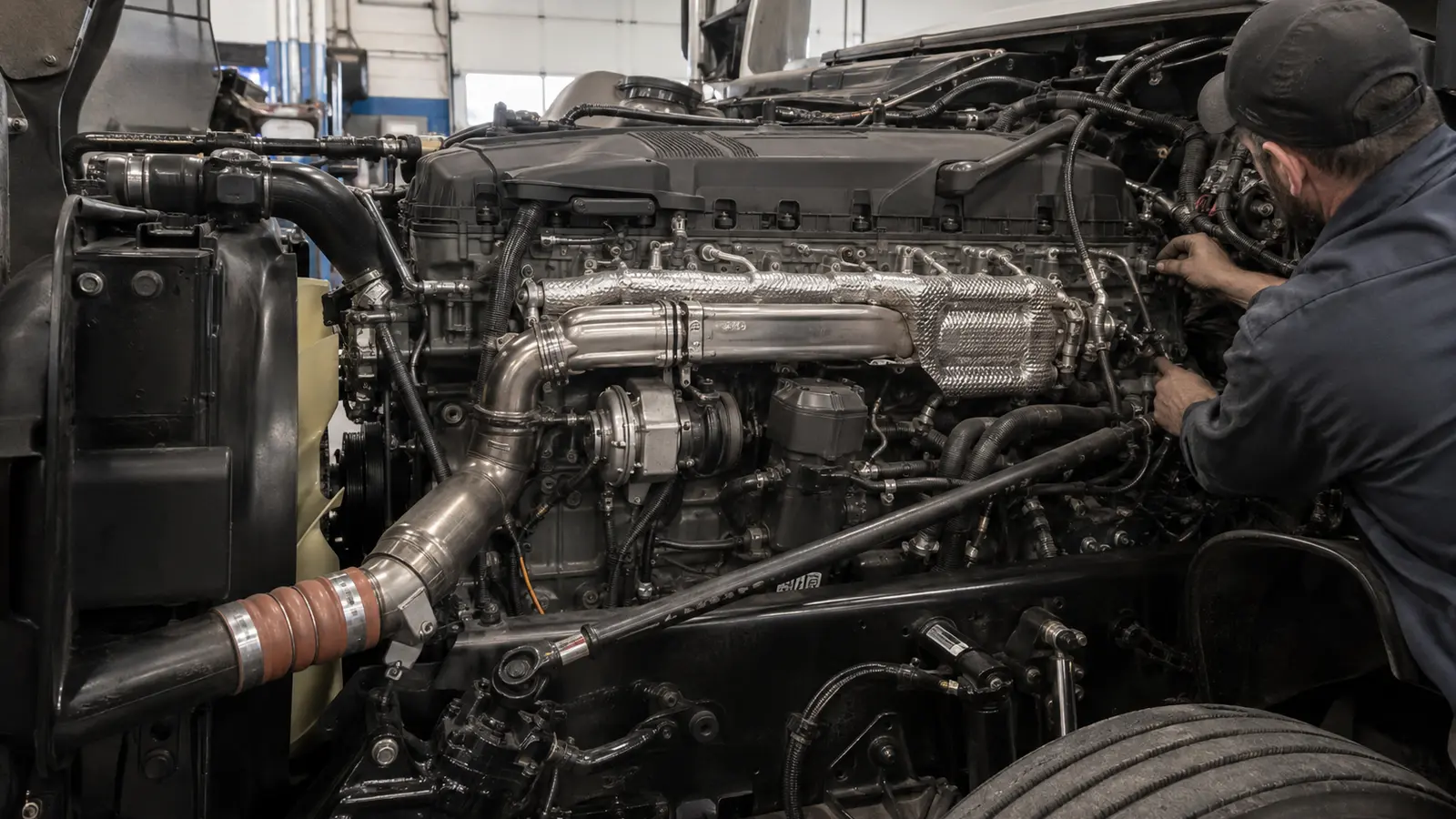
PACCAR MX-13 is a 12.9-litre-class PACCAR heavy-duty engine family. Product generations and ratings vary.
Production and emissions eras
Keep EPA/model-year literature separate and do not transfer a current MX-13 rating or aftertreatment package to an earlier engine.
Published ratings and claims
PACCAR publishes model-year-specific ratings and claims through product sheets; verify the exact engine and calibration. Published ranges and performance statements are manufacturer data, not SemiTrucks.ca test findings; the installed calibration must be verified.
Applications and truck relationships
MX-13 is offered in qualified Kenworth and Peterbilt builds. Model badge alone does not establish the engine or TX transmission.
Identify the engine in one truck
Record engine serial, emissions label, ECM rating and build sheet, plus service and campaign history.
Transmission and vehicle integration
Confirm TX-12/TX-18/other transmission identity, integration, rear ratio, cooling and PTO/application boundaries.
Canadian climate and duty-cycle questions
Assess linehaul versus vocational heat load, winter operation, idle hours, aftertreatment and dealer support on intended Canadian routes.
Rebuild, remanufacture and swap limits
A replacement long block, remanufactured engine, ECM change or later swap can separate the current engine from the truck's original build. Reconcile the engine serial, ECM identity, invoices, certification labels and physical installation; do not infer factory fitment from appearance.
Reviewed and verification limit
Reviewed September 4, 2026. Ratings, availability and service information change by year, market and calibration. Confirm the individual engine with the manufacturer or qualified service source.
MX-13 year and chassis pairing
An MX-13 in a Kenworth or Peterbilt should be researched by model year, emissions generation, rating and chassis installation. Record the engine identity and compare it with PACCAR service evidence instead of treating every MX-13 as the current published product.
PACCAR powertrain decision
If the truck also uses a PACCAR automated transmission, review the integrated calibration, clutch and campaign history. If it uses another transmission, confirm the approved pairing and evaluate service access for both component families.
Verify the individual truck
Build information, component tags, service records, diagnostics and a qualified inspection take priority over general family-level guidance.
Sources & Technical References
Primary manufacturer and government resources for continuing configuration-specific research.
PACCAR PowertrainPACCAR — MX-13