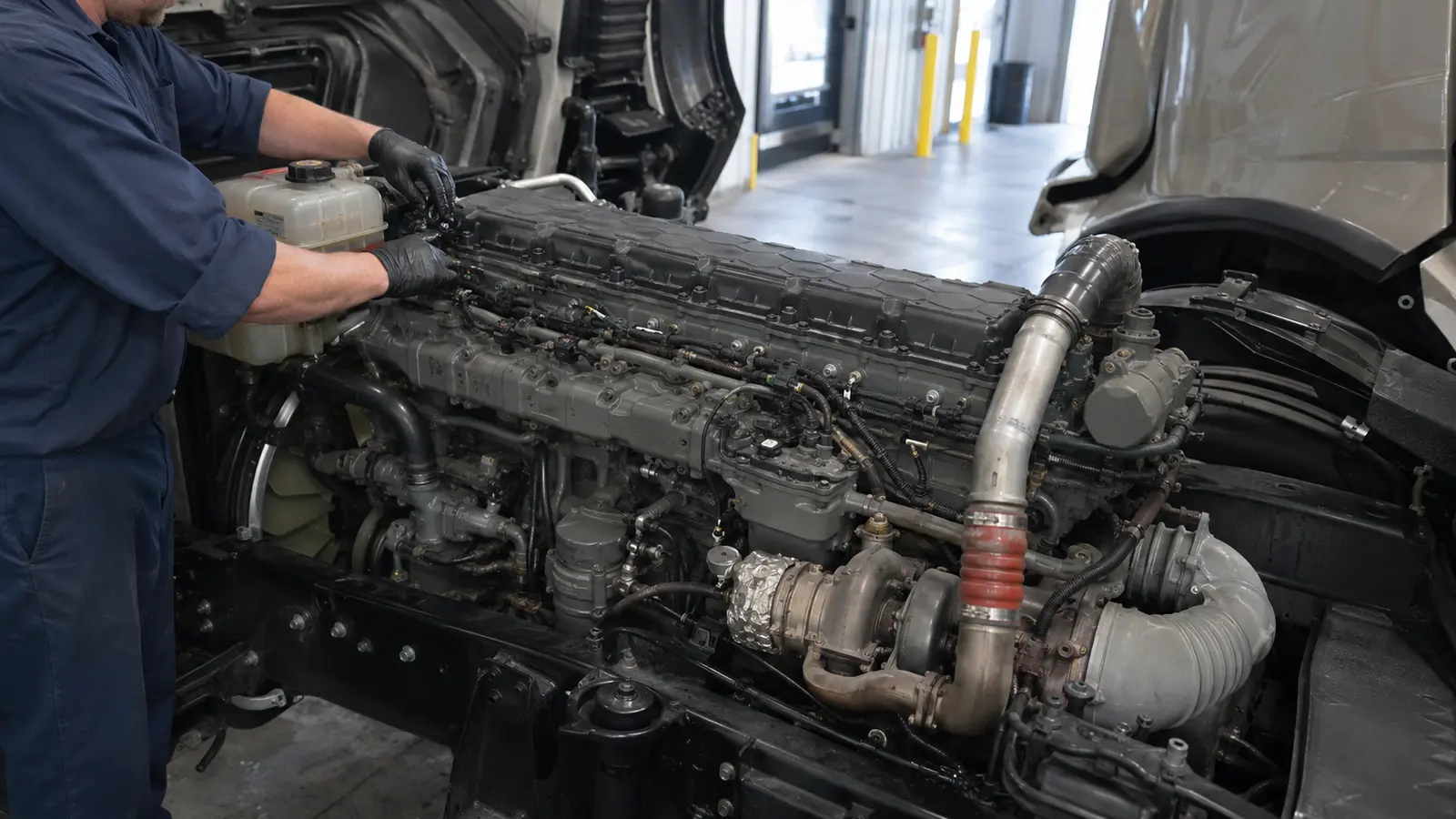
Exact identity and naming boundary
Volvo D13 is Volvo's 13-litre heavy-duty engine family for North American highway and regional trucks. D13 Turbo Compound and later all-new-VNL contexts must be identified explicitly.
Production and emissions eras
Separate legacy VNL-era D13 generations, Turbo Compound offerings and the revised D13 launched with the all-new VNL.
Published ratings and claims
Volvo publishes generation-specific ratings and manufacturer efficiency claims; use the exact year and configuration. Published ranges and performance statements are manufacturer data, not SemiTrucks.ca test findings; the installed calibration must be verified.
Applications and truck relationships
D13 is offered in qualified VNL/VNR builds with I-Shift, but exact rating, transmission and cab availability vary.
Identify the engine in one truck
Capture engine serial, emissions label, ECM rating, Turbo Compound hardware where claimed, build sheet and service/software history.
Transmission and vehicle integration
Verify I-Shift model, control software, rear ratio and whether I-Torque or another package is actually installed.
Canadian climate and duty-cycle questions
Review mountain grade, highway speed, winter start, idle, aftertreatment and service access; manufacturer savings claims remain attributed.
Rebuild, remanufacture and swap limits
A replacement long block, remanufactured engine, ECM change or later swap can separate the current engine from the truck's original build. Reconcile the engine serial, ECM identity, invoices, certification labels and physical installation; do not infer factory fitment from appearance.
Reviewed and verification limit
Reviewed September 4, 2026. Ratings, availability and service information change by year, market and calibration. Confirm the individual engine with the manufacturer or qualified service source.
D13 generation and technology
Volvo has used the D13 name across materially different generations. Identify year, emissions system, rating and any published turbo-compound or other technology only from the applicable build; a current D13 feature list is not evidence for an older VNL.
D13 and I-Shift evidence
Read engine and I-Shift histories together, including software, clutch and actuator work. Confirm total and idle hours, aftertreatment repairs and steering or chassis findings separately so integrated branding does not conceal truck-level condition.
D11 and D13 coverage
The marketplace includes D11 and D13 records. Treat them as separate engine families and verify the installed engine, generation, calibration and I-Shift pairing from authoritative records.
Verify the individual truck
Build information, component tags, service records, diagnostics and a qualified inspection take priority over general family-level guidance.
Sources & Technical References
Primary manufacturer and government resources for continuing configuration-specific research.
Volvo — D13Volvo — powertrain