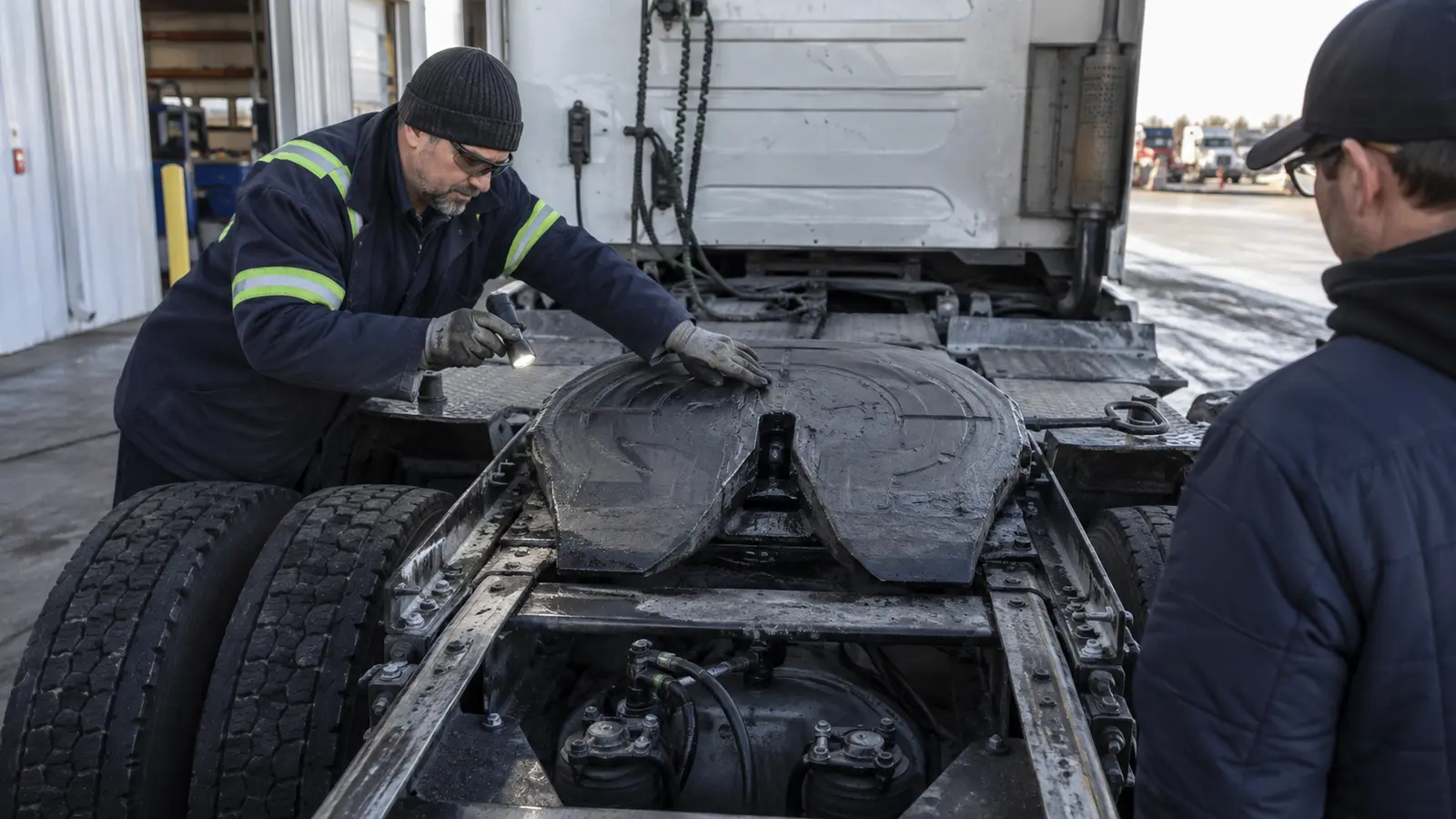
Sliding and fixed fifth wheels
A sliding fifth wheel can provide adjustment within its approved mounting range; a fixed installation does not. Adjustment affects tractor axle loading and trailer clearance, but it does not override component or legal limits.
Condition and locking
Inspect the plate, throat, jaws or locking mechanism, pivot points, stops, slider teeth, rails, air release and mounting structure as applicable. Wear, cracking, looseness or uncertain locking requires qualified evaluation.
Height and compatibility
Fifth-wheel height, trailer kingpin and upper-coupler condition, tractor frame layout and clearance all matter. Confirm compatibility for the trailers and operating articulation expected.
Load distribution and safety
Fifth-wheel position can influence steer and drive axle loading. Use verified weights and qualified guidance. Do not attempt unsafe adjustment or repair when damage, wear or locking problems are suspected.
Position affects the complete combination
Fifth-wheel travel changes trailer clearance and load distribution. Confirm slide range, lock condition, kingpin compatibility, frame installation and clearances with the actual trailer and tractor configuration.
Verify the individual truck
Build information, component tags, service records, diagnostics and a qualified inspection take priority over general family-level guidance.
Sources & Technical References
Primary manufacturer and government resources for continuing configuration-specific research.
JOST fifth-wheel literature libraryJOST outboard slider inspection instructions