MODEL COMPARISON · REVIEWED SEPTEMBER 9, 2026
Kenworth T680 vs Peterbilt 579
Compare like-for-like diesel highway tractors. The T680 technical examples here use the 2019 factory catalogue; the 579 reference uses the later product catalogue and new-model brochure. This is a used-buyer decision framework across identified editions, not a same-model-year road test. For a later T680 or earlier 579, first use the generation research and VIN-linked build.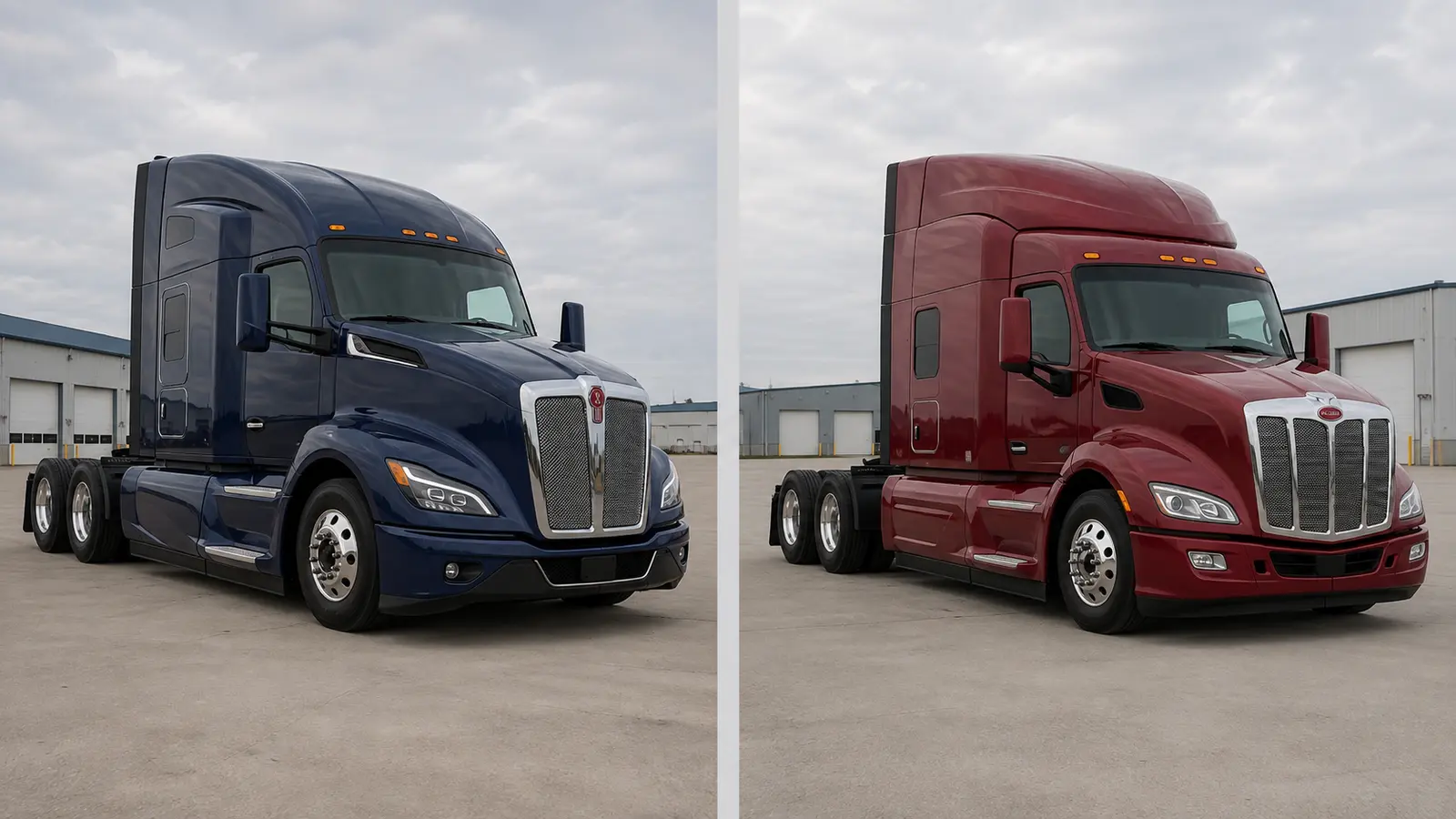
Regional work: choose the cab you will actually use
For a home-daily route around Edmonton or the GTA, test the candidate in the type of yard and loading area it will serve. Compare physical wheelbase, mirrors, visibility and coupling clearance. A short sleeper may be useful for occasional layovers; otherwise price and maintainability may matter more than unused accommodation. Ask both sellers for the exact build and measure it, rather than infer manoeuvrability from a hood label.
Highway fleet: compare a repeatable specification
For interprovincial highway work, compare the same load, trailer height, cruise speed, driver arrangements and seasonal exposure. Match rear ratio, tyre specification, engine rating and transmission to that duty. Request route-based fuel and idle records with the same units and time window. Neither a manufacturer fuel-saving claim nor a single driver anecdote is a controlled T680-versus-579 test.
Owner-operator: price the condition findings
A lower purchase price can leave more room for a repair reserve, but only if the inspection bounds the likely work. Obtain written estimates for immediate defects, verify the scope and transferability of any warranty, and budget bunk climate systems, tyres and downtime. Choose the candidate whose evidence and budget fit your work. There is no universal winner when one truck has a different generation, duty history or maintenance condition.
Which should you buy?
The better purchase is usually the truck with the configuration, condition, maintenance history and price that best fit the intended work. Arrange an appropriate inspection and compare actual records before choosing.
Research both models
Sources & model references
Primary manufacturer material supports model context. Verify the applicable generation and individual build.
Kenworth T680 factory brochure, 2019Peterbilt new Model 579 introduction, 2021 powertrain contextPeterbilt Model 579 product informationKenworth T680 product information