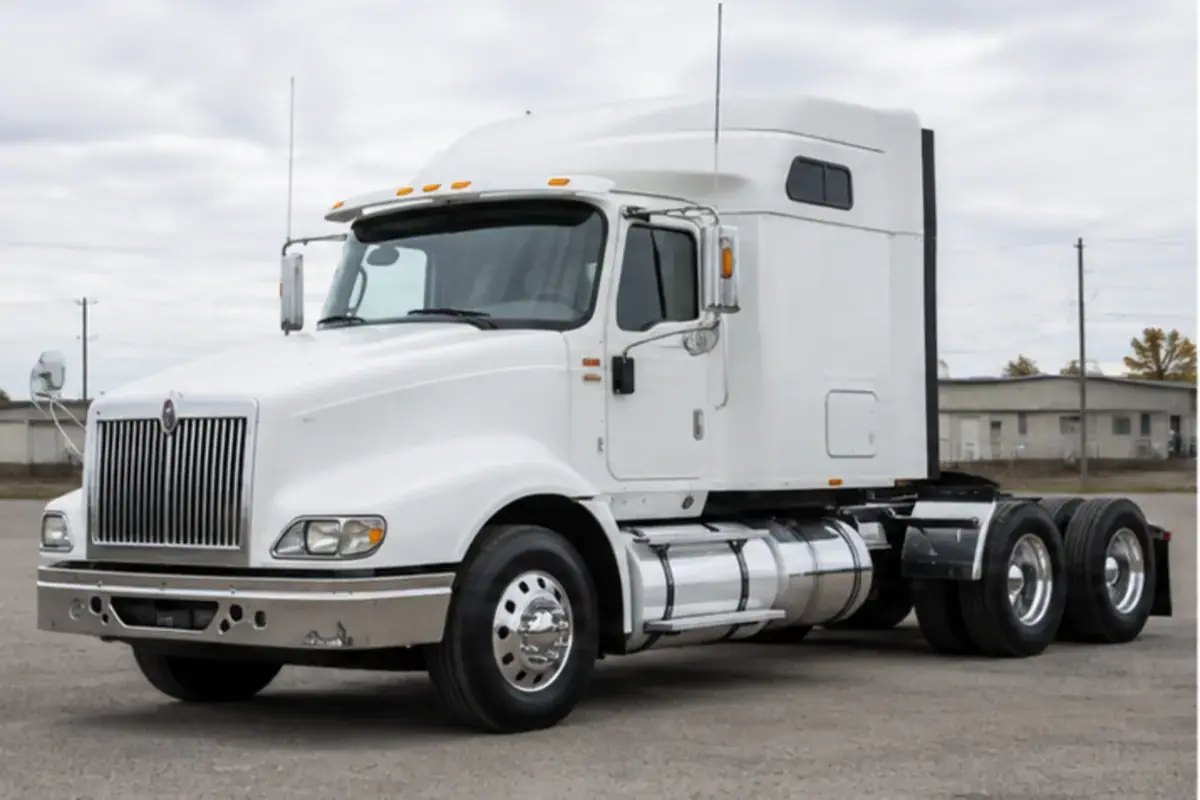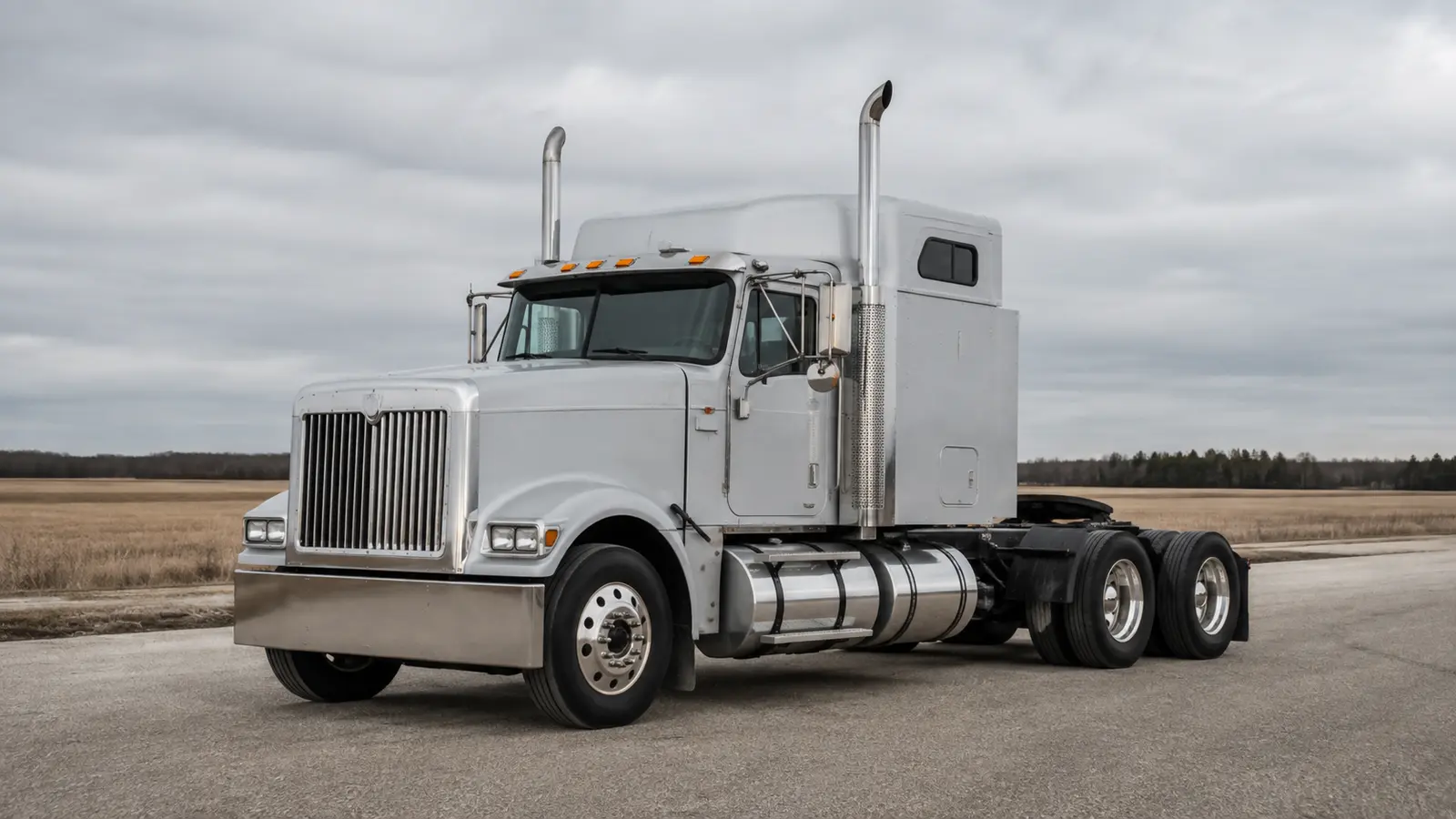

International 9900 market position
The International 9900 is a legacy long-hood conventional remembered for traditional styling and owner-operator appeal. Individual trucks can differ substantially by model year, sleeper, wheelbase, axle specification, prior duty and later modifications.
Powertrain considerations
Used 9900 trucks span older powertrain generations and a wide range of original or replacement engine, transmission and rear-axle combinations. Identify every installed component from build records and component tags rather than inferring the specification from the hood badge or appearance.
Common configurations
The 9900 is commonly used for traditional long-hood highway, owner-operator and selected heavy-spec work. Exact equipment changes by model year, market and original order.
- Day-cab and sleeper configurations depending on year and build
- Manual-transmission and axle-ratio choices matched to different highway or heavy-spec duties
- Owner-operator, fleet and application-specific wheelbase, tank and chassis arrangements
Buying a used 9900
Inspect hood and cab mounts, frame rails and crossmembers, steering, suspension, brakes, driveline, fifth wheel, sleeper structure, wiring changes and corrosion. Verify engine identity, rebuild evidence, transmission condition and whether modifications were completed to an appropriate standard.
Models buyers also compare
Buyers drawn to traditional long-hood trucks may also research the Kenworth W900 and Peterbilt 389. Compare actual configuration, condition, records, parts and service access, and total operating cost rather than style alone.
Exact identity and model boundary
A legacy long-hood family whose 9900, 9900i and related designations require archival confirmation.
Generation and transition context
Do not collapse all 9000-series or Eagle-branded trucks into one model; identify the factory model and year.
Qualified powertrain possibilities
Broad legacy engine/manual possibilities make serial plates and line-set evidence essential.
Configuration and intended work
Highway and heavy-spec custom builds can have extensive later modifications.
Evidence to request before travel or purchase
The badge and advertisement are not enough. Build an individual-truck evidence file.
- line-set ticket
- exact 9900-series designation
- engine/transmission tags
- axle data
- swap/customization records
Canadian climate and duty-cycle checks
Inspect age-related wiring, frame, corrosion, cooling, cab mounts and parts support.
Verification limit
Reviewed September 4, 2026. This model authority is not a VIN decoder or fitment guarantee. The build sheet, certification labels, component tags, service records, diagnostics and physical inspection establish the individual truck.